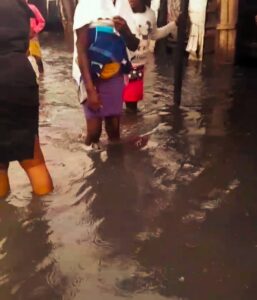
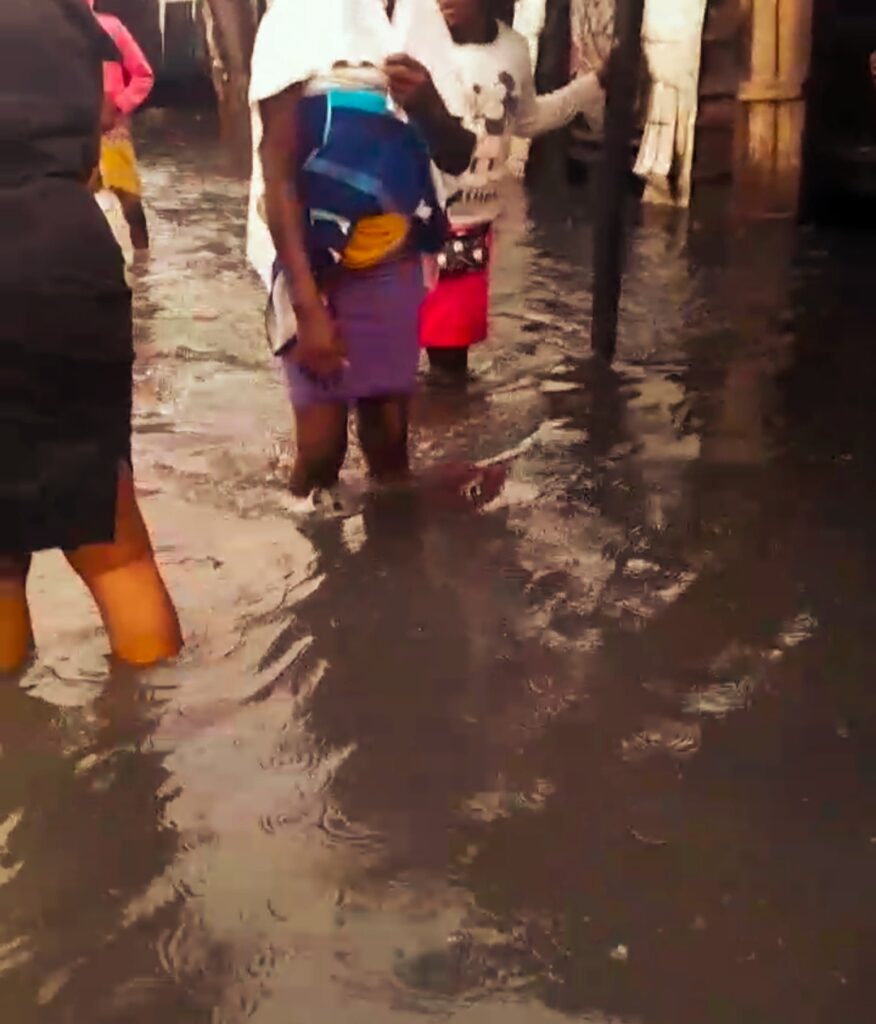
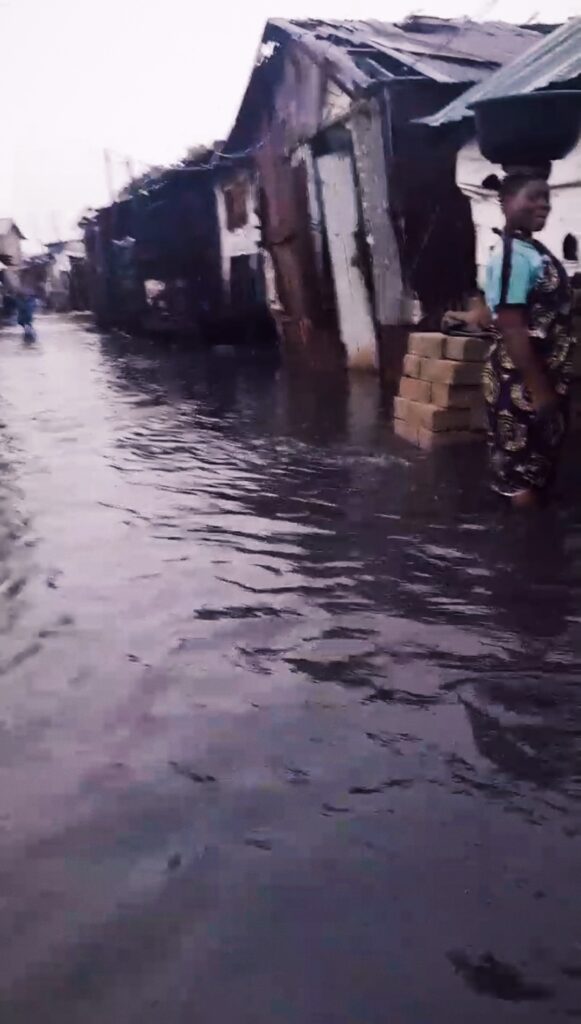
In Lagos, when floodwaters rise, access to lifesaving maternal care can disappear overnight. What begins as intense rainfall quickly transforms into blocked roads, submerged communities, and disrupted access to essential services. For many residents, flooding is no longer an occasional disaster; it is a recurring reality that shapes how they live, move, and seek care.
This is not just an infrastructure challenge; it is a growing maternal health crisis shaped by climate change. Across Nigeria, seasonal flooding continues to expose deep weaknesses in urban planning and healthcare access. Drainage systems are overwhelmed, roads become impassable, and entire communities are cut off. While these effects are visible, a more dangerous and often overlooked consequence lies beneath them—the impact on maternal health.
Access to healthcare is critical for safe pregnancy and childbirth. Yet during periods of extreme weather, this access becomes severely limited. Roads leading to health facilities are flooded, movement becomes risky, and some clinics become inaccessible. Pregnant women are often left to decide whether to attempt unsafe journeys or remain at home without care. In a country already facing one of the highest maternal mortality rates globally, these disruptions increase the likelihood of preventable deaths.
According to the World Health Organization (2025), Nigeria accounts for a significant proportion of the global maternal mortality burden at 993 deaths per 100,000 live births. These figures already reflect persistent gaps in access to quality healthcare. Flooding further intensifies these risks. It disrupts antenatal care, increases exposure to infections, and contributes to unsafe deliveries, placing additional strain on an already fragile health system.
This reality is not abstract; it is already unfolding in communities like Sogunro, an underserved, flood-prone area within the Iwaya/Makoko axis of Yaba, Lagos. While Sogunro is one example, similar conditions exist across many vulnerable communities in Lagos and beyond.
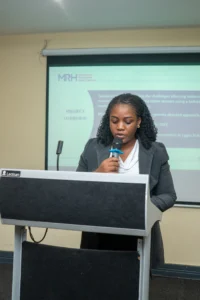
During a recent visit by the MRH Collective team, the extent of these challenges became clear. The community faces multiple structural barriers, including poor road networks, inadequate drainage, and limited access to water and sanitation. These challenges have been compounded by recent housing displacements following the 2026 demolitions by housing authorities. For pregnant women, the effects of flooding are immediate and deeply personal, often forcing them to choose between safety and essential care.
According to Ame, a pregnant resident, the journey to the nearest health centre becomes dangerous when water levels rise, especially given the distance she must travel.
“Sometimes I won’t even attend ANC because of the rain. The health centre is quite a distance, and the water rises to our laps when we try to move. It is not safe.”
For Sewanu, another expectant mother, the experience is similar. Heavy rainfall transforms the environment into a health risk, making movement difficult due to contamination, debris, and unsafe pathways. In many cases, she chooses to remain at home and miss essential care. Even when she attempts to seek care, the journey is physically exhausting, often requiring her to rent rain boots that quickly become heavy and uncomfortable.
“Whenever there is heavy downpour, there is flood. It is difficult to walk because of germs, the dirty environment, leaves scattered everywhere. I mostly stay back.”
Flooding does not only block access to care, it also enters homes. It creates unsanitary living conditions, contaminates water sources, and increases the risk of disease outbreaks. In such situations, many women resort to self-care instead of seeking professional medical support.
The women were also clear about what would make the greatest difference in their lives. They called for improved drainage systems and better road infrastructure to reduce flooding and enable safer movement. They emphasized the need for health facilities within their community, along with access to nurses trained in Respectful Maternity Care. In addition, they identified clean water, reliable electricity, and access to affordable or free medications as critical needs. Practical support such as raincoats, boots, and umbrellas was also highlighted as a simple yet impactful way to ease mobility challenges.
“Provide raincoats, rain boots, and umbrellas for pregnant women. Build health facilities within the community. Employ nurses and doctors who are caring and concerned about our wellbeing. And please—provide free drugs.”
“Anytime I drink water from the borehole in the community, my stomach will be paining me…we need clean water”
Beyond these immediate needs, the women expressed a strong willingness to participate in a community-based research that would follow pregnant women throughout pregnancy and up to six weeks postpartum, with the aim of generating evidence on how extreme weather—particularly heavy rainfall and flooding—affects maternal health outcomes. They indicated openness to virtual engagements, while noting that any in-person interactions would be most convenient in the mornings, helping them avoid the harsh midday heat and better manage their daily responsibilities. Importantly, financial incentives were not a primary driver of their interest. Instead, what mattered most was access to quality, respectful maternity care and essential medicines.
“If they can send caring doctors and nurses to attend to us in a friendly manner, I will participate well. We just need people who care.”
While flooding alone did not create Nigeria’s maternal health crisis, it is undeniably deepening it. Displacement disrupts antenatal schedules, while overcrowded and unsanitary conditions increase exposure to diseases such as cholera and malaria, both of which pose serious risks during pregnancy. Every flooded road, every inaccessible clinic, and every unattended birth reflects the growing intersection between climate vulnerability and maternal health.
Ame and Sewanu’s experiences are not isolated. They represent the lived realities of many pregnant women in flood-affected communities, where extreme weather continues to shape health outcomes in profound ways.
Addressing maternal health in Nigeria now requires urgent attention to climate-related risks. As extreme weather events become more frequent, their impact on vulnerable populations will only intensify. Coordinated action from government, development partners, and civil society is essential. Investments in resilient infrastructure and community-based healthcare services must be prioritized, alongside practical and immediate support for women in flood-prone areas.
No woman should have to risk her life to give birth, and no flood should determine whether she survives pregnancy or childbirth.
Disclaimer: Original names have been replaced with pseudonyms to protect the identities of the women featured. Any resemblance to real persons in the communities mentioned is purely coincidental.
World Health Organisation (2025). Trends in maternal mortality 2000 to 2023: estimates by WHO, UNICEF, UNFPA, World Bank Group and UNDESA/Population Division. Retrieved from https://www.who.int/publications/i/item/9789240108462 30th March, 2023